


Ping VPN
4.9853.00 Reviews
App Specs
- Version
- 1.2.0
- Updated On
- License
- Free
- Downloads
- 10,000,000+
- Developer
- F2P
- Categories
- Tools
- Platform
- Android
Screenshots
 Analysis by AppCompare
When I try a VPN, the first week is usually the easy part: I install it, connect, and enjoy the feeling that my browsing has an extra layer of protection. The harder question is whether I still want it on my phone once that novelty fades. Ping VPN makes a promising first impression as a straightforward tool from F2P, but a VPN’s lasting value depends on more than a prominent connect button. I’d judge it by whether it fits ordinary routines, whether its limits are clear, and whether I can trust it with the traffic I actually care about.
From first connection to a lasting habit
I use the first week with a VPN to see whether its simple connection flow actually fits my routine, rather than treating an easy start as a reason to trust it automatically. The more useful test comes after that: whether I remember when to connect, know what to check if something fails, and still find the app worth maintaining as my needs change.
Why the first week feels inviting
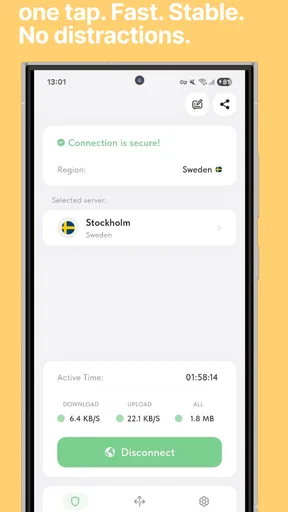
The first thing that caught my eye was the app’s sleek and intuitive interface. Ping VPN doesn’t bombard you with unnecessary menus or options. It’s all about getting you connected as quickly and efficiently as possible. Upon opening the app, you’re greeted with a big ol' button saying “Connect.” Simplicity at its finest.
That kind of design lowers the barrier for someone who has never used a VPN. Instead of having to learn a server list or make a technical choice before doing anything, a new user can start with the basic action and see how it fits into their day. I’d treat that simplicity as a useful starting point, not proof that every detail is effortless: the first connection is only one part of using a VPN responsibly.
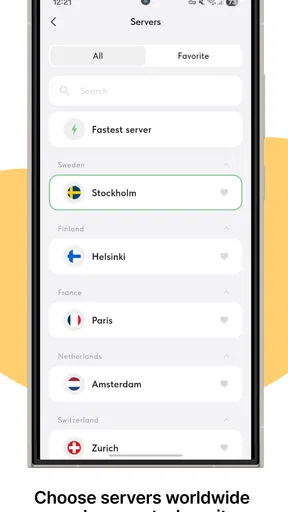
Another cool feature is the app’s ability to automatically connect you to the fastest server available. No more guessing games or toggling through endless options. This feature is a lifesaver, especially if you’re in a rush or just not tech-savvy.
Automatic selection is most helpful when I don’t have a particular location in mind and simply want to get online with less friction. It can save time before checking messages on public Wi-Fi or browsing during a short break. If your goal depends on a particular country or a service that behaves differently by location, though, a fastest-server choice may not be the same as the right server for that task. I’d avoid assuming that speed selection is a substitute for checking whether a VPN suits a specific need.
Performance in everyday use
Alright, so the interface is great, but how does Ping VPN actually perform? In short, it’s fast. I tested it on multiple occasions, streaming HD videos and playing online games, and it didn’t disappoint. The connection was stable, and I experienced minimal lag. It’s almost like the app whispers, “Don’t worry, I got this.”
Worth Reading Before You Choose

Baby Panda World Brings Quick Play to Modern Phones, but Its Game Library Feels Busy

ESPN’s Live Game View Makes Following Close Games Easier

QuizzLand Review: A Good Fit for Short Trivia Breaks, Not Every Player

Basketball Stars: Multiplayer Is Fast, but Can It Recover When Matches Go Wrong?

WEBTOON Turns Phone Updates Into a Better Reading Routine

Link to Windows Runs on Shared Habits, Not Social Feeds
Those experiences are encouraging, but I wouldn’t turn them into a promise about every network or every evening. A VPN adds another link between a device and a website, so the connection you get can depend on where you are, what you’re doing, and the network available at that moment. If a video starts buffering or a game feels less responsive, I’d first compare the same activity with the VPN on and off rather than assume the app has a permanent performance problem.
Moreover, the app supports a variety of protocols, giving you the flexibility to choose between speed and encryption strength. This is particularly useful if you’re juggling between browsing, streaming, or gaming. It’s like having a Swiss Army knife for your internet needs.
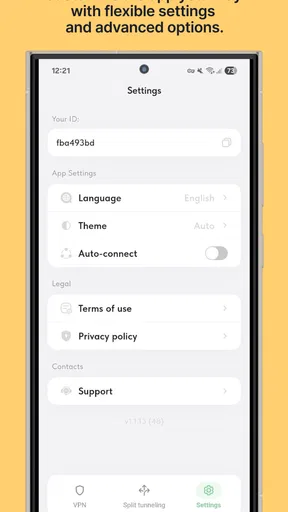
That flexibility is most valuable to a user who is willing to learn what a protocol choice changes. If you’re not sure, the sensible approach is not to keep switching settings at random: start with the default or automatic option, then make a deliberate change only if you have a reason, such as a connection that is unreliable or an activity that needs a different balance. A setting that improves one situation may be less suitable for another, so I’d make one change at a time and check whether it actually helps.
Security needs a careful read
Now, let’s talk about security. After all, what's a VPN if it doesn’t keep you secure, right? Ping VPN employs top-notch encryption standards, which means your data is locked up tighter than Fort Knox. I felt safe knowing my online activities weren’t being logged or monitored.
I’d be cautious about treating any VPN as a complete privacy solution. A VPN can change how traffic is routed, but it does not make every online action anonymous, protect against every kind of scam, or replace sensible account and device security. For sensitive work, I’d read the service’s privacy details and decide whether its handling of data matches the level of trust the task requires. That check matters more than a reassuring feeling from a successful connection.
The app also features a kill switch, which automatically disconnects you from the internet if the VPN connection drops unexpectedly. It’s a nifty feature that ensures your data isn’t accidentally exposed. In essence, Ping VPN adds that extra layer of security that leaves you breathing easy.
A kill switch is especially relevant when I’m moving between networks or relying on a connection for something I would rather not send outside the VPN tunnel. It is still worth checking how the setting behaves on your own device before depending on it: a protective interruption can look like an ordinary loss of internet access, and that may be confusing if you are in the middle of a call or upload. I’d test the workflow with a low-stakes task first, then keep the feature in mind when planning anything time-sensitive.
Who benefits from keeping it installed
One of the things I love about Ping VPN is its no-nonsense approach. It's the kind of app you can hand over to your grandma, and she’d probably figure it out. The onboarding process is straightforward, and there are helpful tips scattered throughout the app to guide you along the way.
For someone who wants a simple way to start a VPN connection without building a routine around technical settings, that approach is a genuine advantage. I can see it suiting a person who regularly uses shared Wi-Fi, wants a quick connection before browsing, or prefers an app that does not make every session feel like a configuration task. It is less compelling for a network specialist who needs detailed controls, or for a user who must verify a provider’s privacy and network properties before routing work traffic through it.
A realistic use case is a commute with a stop at a café: I connect before opening email or handling a routine account task, then disconnect when I’m back on a trusted connection if I no longer need the VPN. Keeping that sequence simple is more likely to become a habit than promising myself I’ll remember a long checklist. For an important payment or work login, I’d still check the site address and use the account’s own security protections; the VPN is an extra measure, not permission to ignore the basics.
The app doesn’t come bloated with ads, which is a rarity these days. It’s refreshing to use an app that focuses on delivering a great experience without trying to sell you something every five seconds.
Not having an intrusive sales pitch can make a utility easier to keep around, but it does not answer every practical question about long-term use. I’d still pay attention to whether the connection is stable on the networks I use, whether the app stays current, and whether the privacy terms make sense to me. Those are the checks that turn a pleasant first run into an informed decision about continued use.
Month-to-month value and maintenance
Ping VPN is a free Tools app, and it has a five-point average from around nineteen thousand ratings, with more than a million installs. Those figures suggest that many people have tried it, but popularity alone can’t tell me whether it will suit my own routine. It is rated for everyone, and the current version is 1.1.16; it was released on February 17, 2026, and runs on Android 7.0 or later. F2P is the developer.
For lasting value, I’d look less at the excitement of the first connection and more at whether I remember to use it when it matters. A free utility can earn space by removing friction, but it still needs to behave predictably across the networks I rely on. I would not keep it running automatically just because I installed it; I’d decide when a VPN is useful, check that it is connected before relying on it, and make sure I know how to pause it if a site or local network behaves unexpectedly.
That small routine also helps diagnose problems. If a banking app, a workplace service, or a streaming app fails while the VPN is active, I’d first test whether temporarily disconnecting resolves the issue, then reconnect when appropriate. Some services may react differently to VPN traffic, and repeatedly changing several settings at once makes it harder to identify the cause. A single, reversible check is more useful than assuming the VPN or the service is broken.
Maintenance should be modest, but not nonexistent. I’d keep the app updated through the normal device process, review its settings after a major change in how I use my phone, and occasionally confirm that the protection I expect is actually enabled. Those habits apply especially to a tool that can sit quietly in the background: if I stop noticing it entirely, I may also stop checking whether it still fits my needs.
Where it sits beside other VPN choices
Compared with the usual alternatives, a simple VPN app is easiest to recommend when the priority is quick access rather than careful tuning. A browser’s private mode, for example, is aimed at limiting traces saved locally in that browser; it is not the same thing as routing a device’s connection through a VPN. A VPN can be more relevant on shared networks, while a privacy-conscious browser or changes to account settings may be a better answer for other concerns. I would choose the tool for the problem, not treat these options as interchangeable.
At the other end, a specialist VPN may be a better fit for someone who needs detailed server choice, documented privacy practices, or controls that support a particular professional workflow. I would not choose a tool solely because it makes connecting easy if my work requires evidence about how traffic is handled. Ping VPN’s appeal, as I see it, is the low-effort route into VPN use; users who need to audit a service or fine-tune every connection should compare alternatives on those specific points before committing.
One useful trade-off is convenience versus intentional choice. Automatic server selection can save time for ordinary browsing, while a manual decision may matter when a particular region or a consistent connection is important. I’d use the automatic route for casual sessions and take time to verify the choice when the task depends on location. That distinction helps avoid expecting a single “fastest” option to solve every use case.
When the habit becomes tiring
The main source of fatigue with any VPN is the occasional interruption: a connection may need attention, an app may object to VPN traffic, or a user may forget why a service is enabled and wonder why a page behaves differently. I’d consider that friction before installing it on a phone used for time-critical calls or services that are sensitive to network changes. For those situations, a simpler option may be to connect only when using a network or activity that calls for it.
There is also a difference between wanting more privacy and needing a specific guarantee. If I were handling confidential business information, I would not rely on a general impression of security; I’d check the service’s policies and suitability with the organization’s requirements. Likewise, if my main goal were to access a particular country’s catalog, I’d want to verify that the app offers the location and access I need rather than assuming a VPN will bypass every restriction. A tool can be useful without being the right answer to every privacy or access problem.
For readers wondering whether it is difficult to use, the simple connection flow and onboarding tips make the basic task approachable. The more meaningful question is whether they are comfortable making an occasional judgment call: when to connect, when a failure may be caused by the VPN, and when a different privacy measure is needed. If they want a tool that requires no thought at all, even a clear interface cannot remove those decisions.
A recommendation with sensible boundaries
If you’re in the market for a VPN that’s fast, secure, and easy to use, Ping VPN should be on your radar. It ticks all the right boxes and then some. Whether you’re a casual browser or a hardcore streamer, this app has something to offer.
So, would I recommend it? Absolutely. It’s like having a digital bodyguard that ensures your online presence is safe and sound. Plus, with its user-friendly interface and robust performance, you’ll wonder how you ever surfed the web without it.
My recommendation is strongest for someone who wants a low-friction VPN to try for everyday browsing and is prepared to make a few sensible checks rather than assume a VPN solves every security concern. I’d be more hesitant for a user who needs independently assessed privacy assurances, precise control over locations, or guaranteed compatibility with a particular service. In those cases, choosing a provider or tool that clearly meets those requirements is more important than a simple setup.
Ready to give it a shot? You can find Ping VPN on both Android and iOS. Happy surfing!
Pros
- Easy to set up and connect quickly.
- No registration required for use.
- Minimal impact on device battery life.
- Supports multiple server locations.
- User-friendly interface for all ages.
Cons
- Limited features in free version.
- Occasional connection drops.
- Ads can be intrusive at times.
- Lacks advanced security options.
- No dedicated customer support.
FAQs for Ping VPN
What is Ping VPN and what does it offer?
Ping VPN is a virtual private network service designed to enhance your online privacy and security. It encrypts your internet connection, enabling you to browse anonymously and access content restricted by geo-location. The app offers a user-friendly interface, multiple server locations, and high-speed connections for seamless browsing and streaming.
Is Ping VPN free to use or does it require a subscription?
Ping VPN offers both free and premium subscription options. The free version provides basic features with limited server access, while the premium subscription unlocks additional servers, faster speeds, and enhanced security features. Users can choose a plan based on their specific needs and usage requirements.
How does Ping VPN ensure my online security?
Ping VPN employs advanced encryption protocols to protect your data from hackers and surveillance. It masks your IP address, making your online activities private and anonymous. Additionally, it offers features like a kill switch to prevent data leaks if the VPN connection drops, ensuring robust security at all times.
What platforms are compatible with Ping VPN?
Ping VPN is compatible with both Android and iOS devices, providing a seamless experience across smartphones and tablets. The app is designed to be lightweight and efficient, ensuring smooth performance without draining your device's battery or resources. It also supports multiple device connections under a single account.
Does Ping VPN affect internet speed or performance?
While using any VPN can sometimes cause a slight reduction in internet speed due to encryption overhead, Ping VPN is optimized to minimize this impact. With its smart routing technology and a wide range of server locations, users generally experience minimal speed loss, ensuring smooth streaming, gaming, and browsing.


